

Aluminum CNC Milling: Precision Machining for High-Performance Applications
Introduction
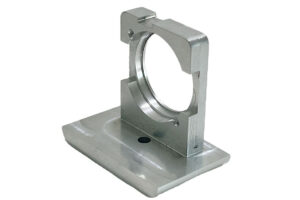 In modern manufacturing, Aluminum CNC milling is a critical process for producing high-precision, lightweight, and durable components. Industries such as aerospace, automotive, electronics, and medical devices rely on CNC-machined aluminum parts due to their exceptional strength-to-weight ratio, corrosion resistance, and machinability.
China Metal Castings (https://chinametalcastings.com/) specializes in high-quality CNC milling services, leveraging advanced machining centers, strict quality control, and engineering expertise to deliver superior parts. This article explores the process, benefits, materials, applications, and future trends of aluminum CNC milling.
What is Aluminum CNC Milling?
CNC (Computer Numerical Control) milling is a subtractive manufacturing process where a rotating cutting tool removes material from an aluminum workpiece to create a custom-designed part. The process is controlled by CAD/CAM software, ensuring extreme precision (±0.005mm tolerance or better).
Key Steps:
-
Design & Programming
-
Engineers create a 3D model (CAD) and generate toolpaths (CAM).
-
CNC code (G-code) directs the machine’s movements.
-
-
Workpiece Setup
-
Aluminum stock (billet, casting, or extrusion) is secured on the machine bed.
-
-
Machining Process
-
High-speed cutting tools (end mills, drills, face mills) shape the part.
-
Coolant is applied to prevent overheating and improve surface finish.
-
-
Post-Processing & Inspection
-
Deburring, anodizing, or polishing may be applied.
-
CMM (Coordinate Measuring Machine) or optical scanners verify dimensions.
-
China Metal Castings uses multi-axis CNC mills (3-axis, 4-axis, and 5-axis) to produce complex geometries with tight tolerances.
Why Choose Aluminum for CNC Milling?
Aluminum is one of the most machinable metals, offering:
✔ Lightweight (1/3 the weight of steel)
✔ High Strength-to-Weight Ratio (ideal for aerospace & automotive)
✔ Excellent Thermal & Electrical Conductivity (for heat sinks & electronics)
✔ Corrosion Resistance (natural oxide layer protects against rust)
✔ Cost-Effective Machining (softer than steel, reducing tool wear)
Common Aluminum Alloys for CNC Milling
| Alloy | Properties | Applications |
|---|---|---|
| 6061-T6 | High strength, weldable, good corrosion resistance | Automotive frames, aircraft fittings, bike parts |
| 7075-T6 | Ultra-high strength (similar to steel) | Aerospace components, military gear |
| 2024-T3 | Good fatigue resistance | Aircraft structures, fasteners |
| 5052 | Excellent formability, marine-grade | Electronic enclosures, marine hardware |
| 6082 | Similar to 6061, better machinability | Automotive parts, structural components |
China Metal Castings selects the optimal alloy based on strength, weight, and environmental requirements.
Applications of Aluminum CNC Milling
CNC-machined aluminum parts are used in:
1. Aerospace & Defense
-
Aircraft structural components (wing ribs, brackets)
-
UAV (drone) frames
-
Satellite & spacecraft parts
2. Automotive Industry
-
Engine blocks & transmission housings
-
EV battery enclosures
-
Lightweight chassis components
3. Electronics & Consumer Goods
-
Heat sinks for CPUs & LED systems
-
Smartphone & laptop casings
-
Robotics & automation parts
4. Medical Devices
-
Surgical instruments
-
MRI & X-ray machine components
-
Prosthetics & orthopedic implants
China Metal Castings serves global clients with high-precision aluminum parts for these industries.
Advantages of Aluminum CNC Milling
-
Precision & Complexity
-
CNC mills achieve ±0.005mm tolerances and intricate geometries.
-
Ideal for prototyping & mass production.
-
-
Fast Turnaround
-
High-speed machining reduces lead times vs. traditional methods.
-
-
Cost Efficiency
-
Minimal material waste (unlike casting or forging).
-
Lower labor costs due to automation.
-
-
Superior Surface Finish
-
Smooth finishes reduce post-processing needs.
-
-
Scalability
-
Suitable for low-volume prototypes and high-volume production.
-
Future Trends in Aluminum CNC Milling
-
AI & Automation
-
Machine learning optimizes toolpaths for efficiency.
-
Robotic loading/unloading increases productivity.
-
-
Hybrid Manufacturing (Additive + CNC Milling)
-
3D-printed aluminum parts finished with CNC for precision.
-
-
Sustainable Machining
-
Recycling aluminum chips reduces waste.
-
Energy-efficient CNC machines lower carbon footprint.
-
-
5-Axis & Micromachining Advancements
-
More complex aerospace & medical components.
-
China Metal Castings invests in next-gen CNC technology to stay competitive.
Conclusion
It is a cornerstone of precision manufacturing, enabling industries to produce lightweight, high-strength, and corrosion-resistant components. With advancements in multi-axis machining, automation, and sustainable practices, companies like China Metal Castings (https://chinametalcastings.com/) continue to push the boundaries of what’s possible in metal fabrication.
Whether for prototyping or large-scale production, aluminum CNC milling remains a cost-effective, reliable, and high-performance solution for modern engineering challenges.


