

Brass Die Casting
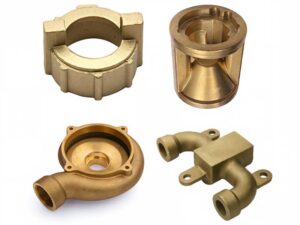 Brass die casting produces copper-zinc alloy components that combine high electrical and thermal conductivity, excellent corrosion resistance, good machinability and an attractive natural finish. Compared with aluminum and zinc, brass is a far more demanding die casting material: it melts between roughly 900 °C and 940 °C, must run in cold chamber machines, and imposes heavy thermal load on the tool. Yet for valve bodies, plumbing fittings, electrical connectors, marine hardware, lock components and decorative parts, no other casting route delivers the same balance of conductivity, pressure tightness and service life. At ChinaMetalCastings we produce custom brass die castings from leaded free-cutting grades through to lead-free alloys that satisfy potable water and electronics regulations, and we support buyers from DFM review through sampling, mass production and final inspection.
Brass is one branch of our wider capability. The full process range, including hot chamber work, is described on our die casting service page, where you can also compare brass against aluminum die casting and zinc die casting.
Why Choose Brass Die Casting
Electrical and Thermal Conductivity
Brass retains a substantial share of pure copper’s conductivity while adding strength and castability. Typical brass grades deliver electrical conductivity in the region of 25% to 30% IACS, which is far above aluminum and zinc die casting alloys, and thermal conductivity around 110 to 120 W/m·K. For switch housings, terminal blocks, busbar connectors, heat sink inserts and current-carrying structural parts, this combination means the component conducts electricity and dissipates heat without the cost and machining difficulty of pure copper. Designers often specify brass where an aluminum casting would overheat or where a zinc part would carry current poorly and soften at temperature.
Corrosion Resistance, Wear Behavior and Machinability
Brass forms a stable surface layer in most indoor, fresh water and mildly marine environments, so it holds up where zinc requires plating and where aluminum needs anodizing or coating. Copper-zinc alloys also run well against steel in sliding contact, which is why brass bushings, worm wheels, threaded inserts and bearing sleeves remain common. Machinability is the third advantage: free-cutting brass chips short, cuts at high speed and holds tight tolerances, so secondary CNC machining after casting is fast, predictable and cheap. Brass also takes polishing, nickel and chrome plating, and clear lacquer beautifully, which keeps it the default choice for exposed architectural and sanitary fittings.
Brass Alloys Used in Die Casting
Leaded Free-Cutting Brass
CuZn39Pb3, also designated CW614N, is the classic die cast and hot stamped brass. The roughly 39% zinc content gives strength and a warm golden colour, while 2% to 3% lead improves chip breakage, fills fine die detail and seals micro-porosity, which is exactly what pressure-tight valve bodies and fittings need. Where lead is permitted, this grade offers the lowest tooling wear and the best surface quality. Leaded grades remain widely used in general hardware, lock parts and industrial fittings.
Lead-Free and Low-Lead Brass
Regulation has reshaped the market. Potable water components in Europe and North America now fall under lead restrictions that effectively exclude conventional high-lead brass, and electronics customers increasingly demand RoHS-compliant material. The industry response has been a family of substitutes: silicon brass such as CuZn21Si3P, arsenic-modified CuZn38As, bismuth brass and low-lead CuZn40 variants. Each behaves differently in the die. Silicon brass is strong and corrosion resistant but harder to cast and machine; bismuth brass machines well but is sensitive to hot cracking and needs careful thermal control; low-lead grades sit between the two. Alloy choice therefore cannot be separated from geometry, wall thickness and pressure rating, and our engineers review the three together before quoting.
High-Strength and Special Brass Grades
Manganese brass, aluminum brass and complex multi-element brasses raise tensile strength and wear resistance for gears, pump components and heavy-duty mechanical parts. These grades are less fluid than free-cutting brass and demand higher shot pressure plus tighter die temperature control, but they replace bronze or steel assemblies in applications where weight and corrosion matter.
Cold Chamber Die Casting Process for Brass
Brass cannot be die cast in a hot chamber machine. The melt temperature would destroy a submerged gooseneck within hours, so all brass production runs in cold chamber equipment: the shot is ladled into a separate shot sleeve and driven into the die by a plunger that never sits in the metal. Melt temperature is typically held between 900 °C and 940 °C, with the die preheated to around 200 °C to 300 °C depending on geometry and wall thickness. Shot velocity, intensification pressure and die cooling channels must be balanced carefully, because brass freezes quickly, fills thin sections reluctantly and transmits intense heat to the tool surface.
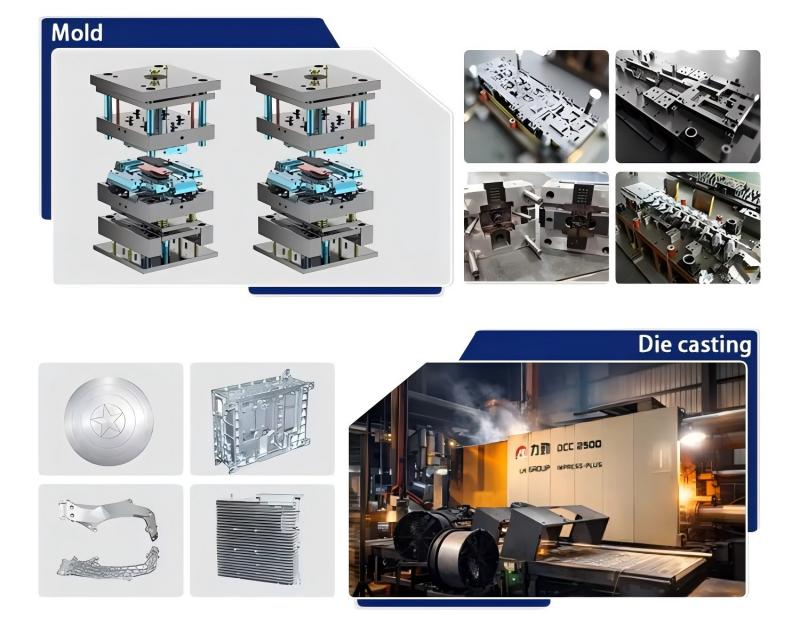
Cycle times are longer than aluminum, typically 40 to 90 seconds for medium parts, and the thermal shock per shot is severe. That is the central economic trade-off of brass die casting: productivity per cavity is lower and tooling cost per shot is higher than aluminum or zinc, but the finished part often eliminates plating, machining and assembly steps that those metals would require.
Melting and Melt Quality Control
Melt quality decides casting quality in brass more than in any other die casting alloy. Zinc evaporates and burns at the melt surface, so furnace atmosphere and flux practice directly control alloy composition drift and dross loss. Melting is normally done in induction or resistance furnaces with a protective cover, and the melt is degassed and skimmed before each casting session. Hydrogen porosity, oxide films and dross inclusions are the three recurring defects, and each traces back to melt handling. Composition is checked by spectrometer on every heat, and recycled returns are carefully segregated by grade to prevent lead contamination of lead-free melts, which is a common and expensive failure in plants that run both families on one line.
Copper Matrix Composites: The Next Material Frontier
Beyond conventional brass, materials research has spent the past two decades developing copper matrix composites: materials that keep the high conductivity of a copper base while adding the strength and wear resistance that plain brass cannot reach. The principle is straightforward. A reinforcing phase, either particles or fibers, is introduced into the copper matrix to block dislocation movement, so strength rises while the conductive path through the matrix remains largely intact. In recent years research activity in North America, Japan and Europe has been intense because these materials promise something rare: high strength combined with high electrical and thermal conductivity.
Particle Reinforced Copper Composites
Particle reinforced copper composites disperse a second phase through the matrix, either added deliberately or generated in situ during processing. Common systems include Al₂O₃/Cu and TiC/Cu. Because the particles are fine and uniformly distributed, these grades keep most of the matrix conductivity while raising tensile strength, hardness and resistance to softening at elevated temperature. They are attractive for resistance welding electrodes, contact parts and current-carrying components that must survive heat and pressure cycles.
Fiber Reinforced Copper Composites
Fiber reinforced copper composites use aligned or regularly arranged fibers, or in situ deformation-formed second phases such as C/Cu and Fe/Cu. The fibers create a much stronger barrier to dislocation movement than isolated particles do, so reinforcement efficiency is higher, but the manufacturing path is harder. These materials serve demanding friction and conduction duties such as brushes, sliding contacts and heavy-duty electrode components where both wear resistance and current carrying capacity are required.
Current Industrial Status and Practical Limits
Honest engineering assessment matters here. Copper matrix composites require special melting and infiltration equipment, and the wettability between fiber reinforcement and the copper matrix is poor, which makes uniform distribution difficult and drives cost up sharply. Because of these obstacles, die casting is not yet an established commercial production method for copper matrix composite parts; the technology remains closer to development and specialist small-batch supply than to mainstream foundry output. Buyers who encounter these grades in a specification should expect dedicated equipment, long lead times and premium pricing, and should verify the supplier’s actual process maturity rather than accepting a data sheet at face value. For the great majority of brass projects, a well-controlled conventional alloy remains the lower-risk and lower-cost answer.
Design Guidelines for Brass Die Casting
Brass rewards generous design. Keep wall sections between about 2 mm and 6 mm; brass fills thin sections less willingly than zinc or aluminum, and very thin walls in long flow paths invite misruns. Use draft angles of 1.5° to 3° on as-cast surfaces and more on deep cores. Round internal corners, avoid isolated heavy masses, and place the gate so the metal front reaches the farthest extremity while still hot. Pressure-tight components such as valve bodies and fittings need a wall thickness that allows for machining of sealing faces without exposing porosity, plus leak testing on every unit. Cast-in threads are practical but need supporting wall thickness. Where a drawing specifies flatness or concentricity tighter than standard casting tolerance, plan the operation as cast plus CNC machining rather than pushing the die beyond its capability.
Tooling, Die Life and Cost Structure
Dies for brass are made from hot work tool steels such as H13, often with surface treatment and stress-relief cycles, because thermal fatigue is the dominant failure mode. Die life is measured in tens of thousands of shots rather than the six-figure numbers typical of zinc, and maintenance intervals are shorter. Practical cost control therefore comes from three places: designing for fewer cavities with better cooling rather than many crowded cavities, keeping wall sections uniform so the die heats evenly, and specifying alloy and finish early so that the tool is not rebuilt after a material change. We quote tooling, piece price and maintenance expectation together so buyers see the full cost of ownership rather than a headline unit price.
Surface Finishing
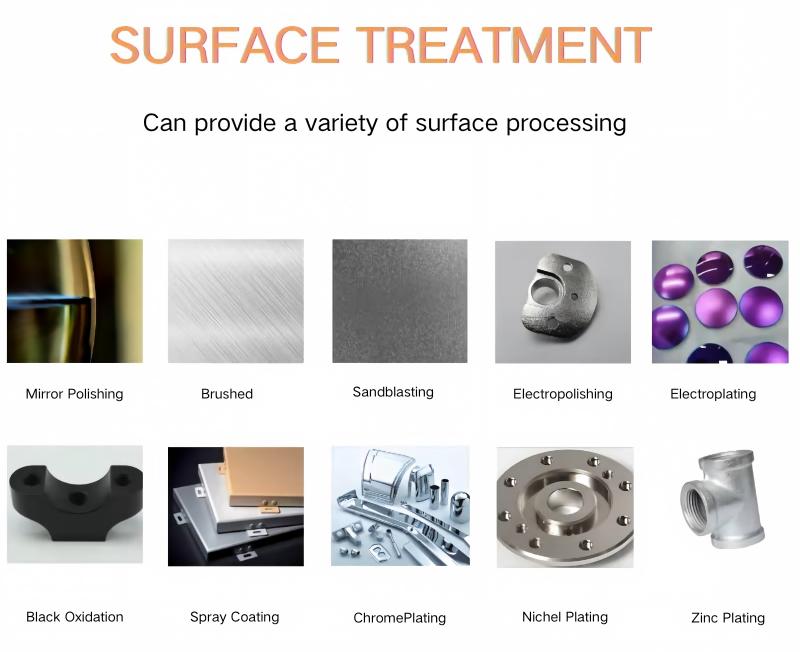
Brass castings support a wide finishing range: vibratory deburring and tumbling, sand and glass bead blasting, mechanical polishing, nickel and chrome plating, tin plating, antique and lacquer finishes, and passivation for uncoated parts. Lead-free grades polish slightly differently from leaded brass and may need adjusted abrasive sequences to reach a uniform colour. Where cosmetic appearance matters, the casting surface must be dense and free of cold shuts, because plating and lacquer amplify rather than hide surface defects.
Quality Control and Inspection
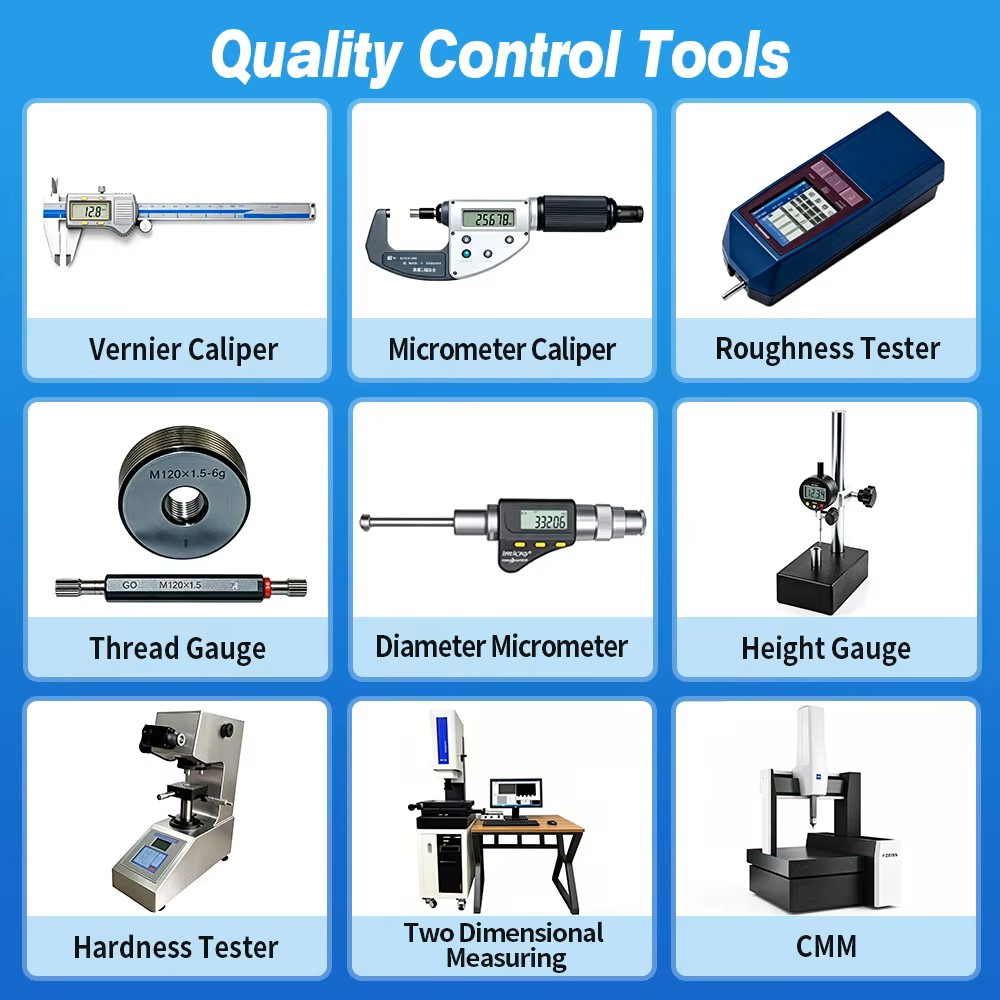
Brass parts usually carry functional requirements, not just dimensional ones. Our inspection sequence covers spectrometer verification of chemistry on every heat, first article inspection against the drawing, in-process dimensional checks, CMM verification of critical features, hardness testing and, for pressure components, leak and hydrostatic testing. Internal soundness is checked by X-ray or sectioning where the application demands it. Documentation includes material certificates, dimensional reports, first article inspection reports and PPAP packages for automotive and industrial programs. The complete workflow is set out on our quality inspection process page, and recurring casting defects with their root causes are covered in our die casting defects troubleshooting guide, which applies equally to copper alloys.
Industries and Applications
Brass die castings serve plumbing and sanitary fittings, valve bodies and water system components, gas and fluid connectors, electrical terminals and switchgear housings, lock and security hardware, marine and pump fittings, instrument housings and decorative architectural parts. For electronic assemblies and connector housings, see our electronics casting parts page; for vehicle programs, our automotive casting parts page covers the relevant quality and documentation requirements. Finished brass components across all processes are displayed in our Project Gallery.
Frequently Asked Questions
Is brass die casting more expensive than aluminum die casting?
Piece price is usually higher. Brass melts at a much higher temperature, requires cold chamber equipment, runs longer cycles and wears dies faster, so tooling and conversion cost are greater. The comparison changes when the brass part eliminates plating, machining or a multi-part assembly, which is common in valve and fitting work.
Can brass die castings meet lead-free requirements?
Yes. Silicon brass, arsenic-modified brass and bismuth brass grades are available and are widely used for potable water and RoHS markets. These alloys behave differently in the die, so the geometry and process must be reviewed together with the material choice rather than substituted after tooling is complete.
How pressure tight can a brass die casting be?
Well-controlled brass die casting delivers reliable pressure tightness for valve bodies and fittings when wall sections are adequate, gates are placed correctly and the melt is properly degassed. Every pressure part is leak tested before shipment, and critical components can be specified with X-ray verification of internal soundness.
Can copper matrix composite parts be die cast?
Not yet as a mainstream production process. Copper matrix composites require special equipment, and poor wettability between reinforcement and matrix makes uniform distribution difficult and costly. Die casting of these materials remains in development and specialist small-batch supply, so conventional brass alloys remain the practical choice for volume production.
Request a Brass Die Casting Quotation
Send your 2D drawing, 3D STEP file, alloy or performance requirement, pressure rating, tolerance callouts and surface finish specification to our technical sales team. We will complete a free DFM review, confirm whether a leaded or lead-free grade fits your market, and return a quotation covering tooling cost, piece price, sampling schedule and inspection plan.