

Zinc Die Casting
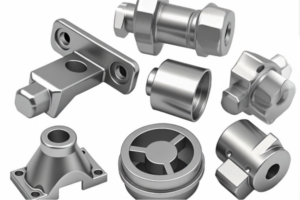
Zinc die casting remains the most cost-efficient production route for small and medium sized, thin-wall, high-precision metal components manufactured in large volumes. Zinc alloys melt at approximately 385 °C, far below the 660 °C melting point of aluminum, which allows hot chamber machines to run short cycle times with long die life, low energy consumption and outstanding dimensional repeatability. At ChinaMetalCastings we supply custom zinc die cast components in Zamak 3, Zamak 5, ZA-8, ZA-12 and ZA-27 alloys, and we also evaluate advanced zinc matrix composite materials for projects that need higher strength, better wear resistance or lower thermal expansion than conventional zinc alloys can deliver. Whether your part is a decorative hardware fitting, a lock component, an electronic connector housing or a wear-resistant mechanical bushing, alloy selection and die design decide both part cost and long-term reliability.
Our complete casting capability is summarised on the die casting service page. Zinc is only one option: for lightweight structural parts many buyers compare zinc against aluminum die casting, while large low-volume components are usually better suited to sand casting or investment casting.
Why Zinc Alloy Die Casting
Physical and Economic Advantages
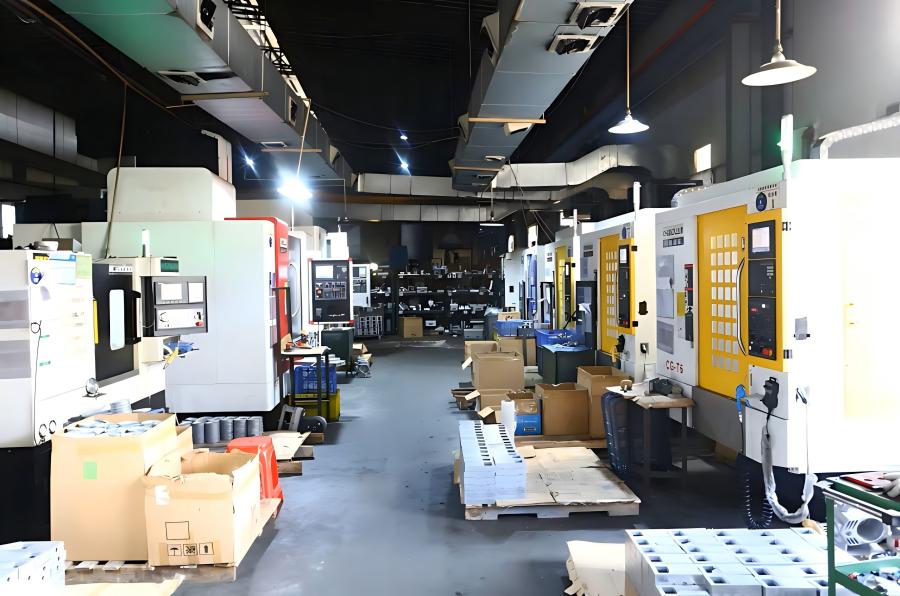
Zinc offers a combination of properties that few other cast metals match for small precision parts. A low melting temperature of about 385 °C reduces melting energy, extends die life and permits hot chamber operation with cycle times frequently between 20 and 60 seconds depending on part weight. Excellent fluidity allows wall sections down to 0.5 mm, fine surface detail, sharp cast lettering, cast-in threads and integrated bosses without secondary operations. As-cast tolerances are tight, typically within ±0.1 mm on critical dimensions depending on part size, and where tighter limits are required we apply secondary CNC machining to achieve them economically.
Zinc also machines and finishes very easily. Cutting forces are low, there is little built-up edge on the tool, so secondary turning, drilling and tapping runs fast and cheaply compared with the same operation on stainless steel or high-silicon aluminum. Zinc accepts electroplating in chrome, nickel, tin and brass finishes, plus powder coating and liquid painting with excellent adhesion, which is why zinc dominates architectural hardware, furniture fittings, luggage components and automotive trim. Zinc additionally has good bearing characteristics and a low wear rate against steel, so bushings, gears, racks and sliding parts are frequently specified in zinc alloy rather than bronze.
Finally, zinc scrap is highly recyclable with low material loss, which keeps raw material cost predictable and lets us quote stable piece prices for long-term programs.
Hot Chamber and Cold Chamber Zinc Die Casting
Two machine configurations serve zinc casting, and choosing the wrong one raises cost or creates quality problems. Hot chamber machines keep the injection mechanism immersed in the molten metal pot, so the shot is taken in seconds and productivity is at its highest. This configuration suits Zamak 3 and Zamak 5, both of which contain less than about 4% aluminum. Cold chamber machines are mandatory for ZA-8, ZA-12, ZA-27 and every zinc matrix composite, because aluminum contents above roughly 4% react aggressively with the cast iron gooseneck and shot sleeve, causing aluminum pickup, sleeve erosion and contaminated castings. Cold chamber operation also allows the higher melt temperatures of 440 °C to 480 °C that ZA alloys require, with better temperature control of the shot profile.
Standard Zinc Die Casting Alloys
Zamak 3, Zamak 5 and Zamak 2
Zamak 3, designated Zn-4Al-0.04Mg, is the most widely used zinc die casting alloy. It combines the best castability in the family with excellent dimensional stability and good surface finish, making it the default choice for general hardware, electronic housings, decorative fittings and components that must hold dimensions over years of service. Zamak 5, or Zn-4Al-1Cu, adds about 1% copper. Tensile strength, hardness and creep resistance all improve, at the cost of slightly reduced dimensional stability and marginally lower elongation. Zamak 5 is preferred for brackets, lock bodies, hinges and load-bearing hardware. Zamak 2, containing roughly 3% copper, is the strongest grade in the Zamak family and is reserved for wear-critical parts such as cams and worm wheels.
ZA-8, ZA-12 and ZA-27 High Aluminum Alloys
The ZA family uses much higher aluminum content and delivers mechanical properties that overlap with cast aluminum and bronze. ZA-8, or Zn-8Al-1Cu, roughly doubles the tensile strength of Zamak 3 while keeping good bearing properties, which makes it popular for bushings, wear plates and power tool components. ZA-12 and ZA-27 push strength and wear resistance further; ZA-27 reaches tensile strength in the region of 400 MPa and is used for heavy-duty bearings, pulley wheels and mechanical parts that would otherwise require bronze. The trade-off is clear: ZA alloys need cold chamber casting, higher melt temperature, tighter process control and often secondary machining, and they show higher thermal expansion and lower dimensional stability than Zamak 3. If your design prioritises long-term dimensional stability above strength, Zamak 3 usually remains the better and cheaper option.
Zinc Matrix Composite Die Casting
Beyond conventional alloys, materials engineering research has developed cast zinc matrix composites that address three weaknesses of plain zinc: insufficient strength for structural duty, mediocre elevated-temperature performance and relatively high thermal expansion. These composites use a ZA-8, ZA-12 or ZA-27 matrix reinforced with ceramic fibers, metal fibers, whiskers or particles. Published test data from casting materials literature shows the potential clearly, and also shows the trade-offs every buyer must weigh before specifying such a grade.
Fiber Reinforced Zinc Composites
Carbon fiber, E-glass fiber, stainless steel fiber and Saffil short alumina fiber have all been evaluated as zinc reinforcements. E-glass fiber reinforced ZA-27 is a representative case. At glass fiber mass fractions of 0%, 1%, 3% and 5%, tensile strength rises from 302 MPa to 349 MPa, 360 MPa and 382 MPa, elastic modulus climbs from 77 GPa to 85 GPa, and Brinell hardness improves from 126 HBW to 137 HBW. Ductility and toughness move the other way: elongation falls from 9.1% to 6.1%, and absorbed impact energy drops from 39 J to 24 J. That pattern, strength and stiffness up, ductility down, repeats across almost every fiber reinforced zinc system.
Fiber type matters as much as fiber content. Adding 20% by volume of stainless steel short fiber (20% Cr, 5% Al, approximately 22 μm diameter by 10 mm length) to a ZA-8 matrix raises strength and wear resistance, but impact toughness falls from about 9 J/cm² for the unreinforced ZA-8 to roughly 4.4 J/cm². Carbon fiber at the same 20% volume fraction pushes impact toughness down to about 2 J/cm², which makes the part quite brittle and unsuitable for shock-loaded duty. Saffil alumina fiber in ZA-27 behaves more moderately, and is often preferred where a balance between strength and toughness is required.
Whisker and Particle Reinforced Zinc Composites
Silicon carbide whisker reinforcement in a ZA-12 aluminum matrix produces the largest strength gains reported in the literature: at 10%, 20% and 30% volume fractions, tensile strength reaches 369 MPa, 407 MPa and 536 MPa respectively, compared with a substantially lower matrix value. Carbon fiber in cast zinc shows a similar upward trend with volume fraction: at 6.0%, 10.6% and 14.6% fiber content, measured tensile strength reaches 165 MPa, 188 MPa and 237 MPa against 36 MPa for the unreinforced alloy. One detail in these test results deserves attention from any sourcing engineer: calculated tensile values are consistently higher than measured values. The gap comes from porosity, incomplete fiber wetting and non-uniform reinforcement distribution, which means composite casting quality depends far more on process control than on the nominal reinforcement percentage printed in a data sheet.
Thermal Expansion and Dimensional Stability
Thermal expansion is where zinc composites offer one of their clearest advantages. Plain ZA-8 expands at about 29 × 10⁻⁶/°C and ZA-27 at about 28 × 10⁻⁶/°C, values high enough to create fit and alignment problems in precision assemblies. Reinforcing the matrix with 20% stainless steel fiber reduces expansion to roughly 20 × 10⁻⁶/°C, carbon fiber to about 25 × 10⁻⁶/°C, and Saffil short fiber in ZA-27 to approximately 22.5 × 10⁻⁶/°C. The literature summarises the result plainly: fiber addition lowers the expansion coefficient by at least 15% across the systems tested, with stainless steel fiber performing best because of its high stiffness. For parts that must hold clearance over a wide service temperature range, this reduction can remove the need for inserts or bi-metal designs.
High Temperature Behavior and Aging
Elevated temperature is the traditional weakness of zinc. Zinc alloys creep under sustained load above roughly 100 °C, and Zamak grades lose hardness and dimensional accuracy progressively. Composite reinforcement improves this behavior noticeably. Alumina reinforced ZA-12 composite castings lose tensile strength much more slowly as temperature rises, retaining about 50% more strength than the unreinforced ZA-12 matrix at 150 °C. Aging tests on E-glass fiber reinforced ZA-27, held at 75 °C, 100 °C and 150 °C for up to 18 hours, show only small hardness changes, and the hardness gain from fiber content remains modest after aging. In practice this means composite zinc grades tolerate warm operating environments better than plain Zamak, but they still should not be treated as high-temperature alloys. Components exposed continuously above 150 °C are better specified in aluminum or another material.
Magnesium Matrix Composites as a Parallel Development
The same composite approach has been applied to magnesium die casting. Magnesium has the lowest density among structural cast metals, roughly two thirds that of aluminum, and magnesium matrix composites reinforced with silicon carbide particles in an AZ91 matrix deliver higher specific strength, better wear resistance, improved damping and electromagnetic shielding. These grades remain a specialist option for electronics, aerospace and automotive weight-reduction programs, and they share the same manufacturing caution as zinc composites: particle distribution and interface quality dominate final properties.
Design Guidelines for Zinc Die Casting
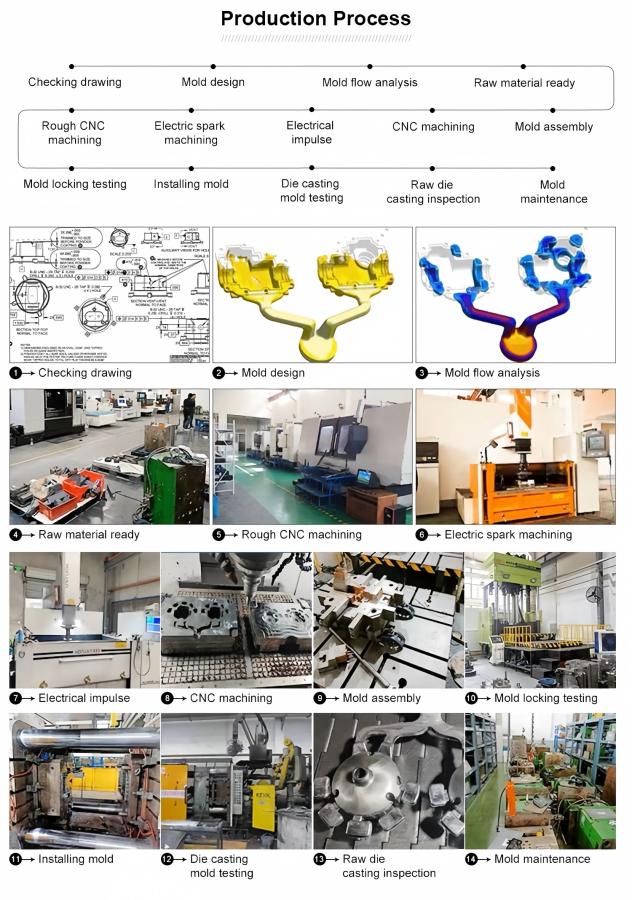
Good zinc castings start with good drawings. Maintain uniform wall thickness where possible; zinc fills thin sections well, but abrupt changes from 0.8 mm to 4 mm create turbulence, cold shuts and porosity. Specify draft angles of 1° to 2° on as-cast surfaces and more on deep pockets. Round internal corners generously, avoid isolated thick masses, and place ejector marks and gate remnants where they will not interfere with sealing faces or cosmetic surfaces. Cast-in threads are practical in zinc but need sufficient surrounding wall thickness to resist stripping torque.
Tooling economics differ from aluminum. Zinc dies experience lower thermal load, so die life is long, frequently well beyond 100,000 shots for simple parts, and multi-cavity tools are economical even at moderate annual volumes. That combination is why zinc wins on total cost for small parts where aluminum would require more cavities, more machining and more finishing labour.
Surface Finishing Options
Standard zinc castings support shot blasting, vibratory deburring, tumbling, powder coating, liquid painting, electroplating in chrome, nickel, tin and brass, plus passivation for uncoated parts. Plating adhesion on Zamak 3 and Zamak 5 is excellent when the casting surface is dense and free of porosity, which is why the plating specification and the casting process must be agreed together rather than separately. For composite zinc grades, polished cosmetic finishing is difficult because the hard reinforcement particles polish at a different rate from the matrix, producing a slightly mottled surface. Buyers should plan composite parts for as-cast, blasted or coated finishes, not mirror polishing.
Quality Control and Inspection

Every production batch runs through incoming material verification, first article inspection, in-process dimensional checks and final inspection before packing. Our equipment includes spectrometer analysis for alloy chemistry, CMM dimensional verification, hardness testing and, where required, X-ray inspection for internal porosity. Full documentation is available, including material certificates, dimensional reports, first article inspection reports and PPAP packages for automotive customers. The complete workflow is described on our quality inspection process page, and typical process defects with their root causes are covered in our die casting defects troubleshooting guide, which applies to zinc in the same way.
Industries Served
Zinc die castings appear in architectural and furniture hardware, door and window fittings, locks and security products, electrical connectors and terminal blocks, automotive interior and trim components, power tools, meters, toys and general consumer products. Lightweight structural castings in zinc serve instrument housings and small gearbox covers where strength and dimensional accuracy both matter. For vehicle programs, see our automotive casting parts page, and finished sample components from all processes are shown in our Project Gallery.
Frequently Asked Questions
Is zinc die casting cheaper than aluminum die casting?
Usually yes for small parts in high volume. Zinc melts at a lower temperature, runs in hot chamber machines with faster cycles, needs less machining allowance and produces better as-cast detail, so the total landed cost is often lower despite higher material price per kilogram.
Can zinc die castings be plated and used outdoors?
Yes. Zamak 3 and Zamak 5 plate well in chrome, nickel and tin, and with adequate coating thickness plus a copper strike layer these parts serve indoor and sheltered outdoor applications. Continuous salt spray or marine exposure requires careful coating specification and should be discussed at design stage.
What is the maximum wall thickness for zinc die casting?
Zinc handles thin walls beautifully, down to about 0.5 mm, but thick sections above 6 mm should be avoided because they cool slowly, create shrinkage porosity and lengthen cycle time. Redesign thick masses into ribs or cored pockets.
Why do ZA-27 parts sometimes crack after machining?
ZA-27 has high strength but lower ductility and higher thermal expansion than Zamak 3, and internal porosity or residual stress from fast cooling can open up during machining. Proper die design, controlled die temperature and stress relief before machining prevent most failures.
Request a Zinc Die Casting Quotation
Send your 2D drawing, 3D STEP file, target alloy or performance requirement, tolerance callouts and surface finish specification to our technical sales team. We will complete a free DFM review, recommend Zamak or ZA grade, or evaluate a composite grade where strength, wear or thermal expansion demands it, and return a quotation covering tooling cost, piece price, sample schedule and quality control plan.